The Environmental Evolutionary Genomics Initiative was established within the University of Adelaide’s School of Biological Sciences in April 2025. Our collaborative researchers engage expertise from a wide range of disciplines to develop and apply environmental and evolutionary genomics tools that can answer large-scale questions and address a range of emerging issues. We work closely with Government, NGO and Industry partners to facilitate genomics research with applied outcomes.
The five key research themes of the Initiative are:
1. DETECTION
Improving processes and accuracy in detecting and identifying species and individuals using DNA

Applications and emerging issues
- Biosecurity surveillance
- Provenancing
- Wildlife crime
- Forensics
- Ancient or degraded DNA
2. EVOLUTION
Understanding how environmental and climatic drivers influence the evolution of species and populations

Applications and emerging issues
- Climate change resilience
- Evolutionary processes
- Systematics
- Human history
- Species adaptation
- Palaeogenomics
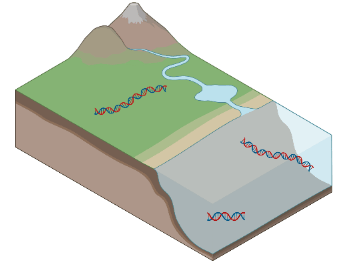
3. BIODIVERSITY
Improving processes and accuracy in characterising communities using environmental DNA
Applications and emerging issues
- Biodiversity monitoring
- Climate and environmental change
- Environmental forensics
- Public health
- Ecosystem restoration baselines
4. ECOLOGY
Using genomic approaches to understand ecosystem function and ecological interactions and how these change over time

Applications and emerging issues
- Ecosystem functioning
- Disease ecology
- Loss of ecosystem processes
- Climate and environmental change
- Co-extinction
- Extinction cascades
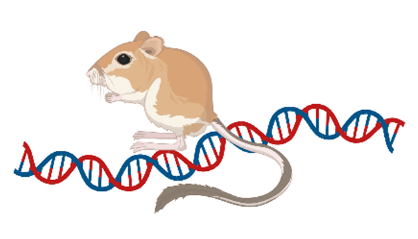
5. CONSERVATION
Developing and applying environmental and evolutionary genomic approaches to aid the conservation of declining species
Applications and emerging issues
- Non-invasive sampling
- Microbiomes, parasites and disease
- Threatened species detection
- Invasive species detection
- Population genomics
- Dietary analyses
 Exploring - INNOVATING -ADVANCing